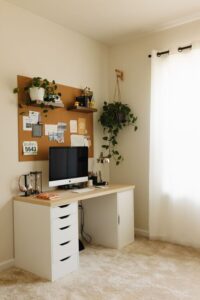

Creating a productive home office environment is essential for anyone who works from home or frequently takes on remote projects. A well-designed workspace can help you stay focused, reduce distractions, and improve your overall work-life balance. In this post, we’ll share practical tips to help you set up a productive home office that suits your needs.
Choosing the Right Location
The first step in creating a productive home office is selecting the best location. Whether you have a spare room or a nook in your living area, consider the following factors:
– Natural Light: Choose a spot with plenty of natural light. Sunlight helps reduce eye strain and can improve your mood.
– Quiet Area: Find a quiet space away from household noise, like TV sounds or kitchen activity.
– Privacy: If possible, pick a place where you won’t be interrupted by family members or roommates during work hours.
– Space: Ensure there’s enough room for your desk, chair, and any equipment you need.
Invest in Comfortable and Functional Furniture
Your furniture plays a big role in your productivity and comfort. Here’s what to keep in mind:
– Ergonomic Chair: Choose a supportive chair that encourages good posture and provides comfort for long work sessions.
– Appropriate Desk: Your desk should be the right height, with enough surface area for your computer, notebooks, and other essentials.
– Adjustable Elements: If possible, use adjustable desks or chairs so you can switch between sitting and standing.
Organize Your Workspace
A cluttered desk can distract you and slow down your work. Keep your workspace tidy by:
– Using Storage Solutions: Store supplies and documents in drawers, shelves, or organizers.
– Keeping Essentials Nearby: Only keep items on your desk that you use regularly.
– Cable Management: Use clips or cable boxes to keep cords neat and prevent tangling.
Set Up Proper Lighting
In addition to natural light, having good artificial lighting is important:
– Desk Lamps: A lamp with adjustable brightness can help when natural light is insufficient.
– Avoid Glare: Position your monitor and lights to avoid glare on the screen.
Minimize Distractions
Home environments often come with distractions. To keep focused:
– Establish Boundaries: Let household members know your work hours and when you shouldn’t be disturbed.
– Use Noise Control: Consider noise-canceling headphones or white noise machines to block out background sounds.
– Limit Personal Devices: Turn off non-work-related notifications on your phone and computer.
Incorporate Personal Touches
Adding personal touches can make your home office more inviting and motivate you:
– Plants: Indoor plants can improve air quality and add a calming green element.
– Artwork or Photos: Display images that inspire or relax you.
– Comfort Items: A cozy throw blanket or a small fan can increase comfort.
Establish a Routine
Creating a routine helps your mind associate your home office with work:
– Regular Hours: Maintain consistent start and end times.
– Scheduled Breaks: Take short breaks to stretch, hydrate, or walk around every hour.
– Clear Start Ritual: Develop a routine to signal the start of your workday, like making coffee or setting up your desk.
Technology and Connectivity
Having reliable technology is essential for remote productivity:
– Fast Internet: Ensure your internet connection is stable and fast enough for video calls and large downloads.
– Backup Solutions: Use cloud storage or external drives to save your work regularly.
– Organized Software: Keep your desktop and files well organized and uninstall unused applications.
Focus on Health and Well-being
Your physical health impacts your work performance:
– Take Movement Breaks: Stand, stretch, or take short walks to prevent stiffness.
– Healthy Snacking: Keep nutritious snacks and water nearby.
– Eye Care: Follow the 20-20-20 rule: every 20 minutes, look at something 20 feet away for 20 seconds.
Evaluate and Adjust Regularly
Your home office should evolve with your needs:
– Assess Efficiency: Reflect weekly or monthly on what’s working and what isn’t.
– Change Layout: Rearrange furniture or add tools as needed.
– Seek Feedback: If you share space, discuss improvements with others.
—
Creating a productive home office environment takes some planning and ongoing effort. By focusing on ergonomics, organization, lighting, and boundaries, you’ll set yourself up for success and enjoy a comfortable space that supports your work goals.